The Evolving Business Geography of Greater London

I presented at the CASA Seminar Series yesterday on the topic of business centre specialisation in Greater London. The discussion drew on previous research into knowledge economy agglomeration and urban property markets.

The analysis showed how the diversity and restricted growth of West London underpins the current extremely high rents, whilst the greatly densified City of London faces oversupply with lower demand for financial services after the economic crises. The recent revival of centres in the City Fringe is based on creative industries and IT/new media, and it’s hoped similar recipes will work for future business centres at Kings Cross and Stratford.


The slides can be viewed here:

London Urban Form 3D Map

The structure of large cities such as London is complex and endlessly fascinating. Effective visualisation can reveal the many patterns in urban structures for research and planning tasks, and the visualisation challenge is to manage the multi-dimensional and dynamic nature of urban complexity. Here we explore the geography of land-use and density across Greater London using 3D cartography at a 500 metre grid scale (HD version here):

London is highly centralised, with recent patterns of intensification in the City of London, Canary Wharf and Inner London more generally cementing this pattern. Meanwhile much of Outer London struggles to attract higher value commercial uses. We will explore the agglomeration, property market, and planning policy processes that underlie these trends in future posts.

Many of land use patterns visible in London resemble the ‘classic’ urban location theory models: there is an extreme Alonso-type density gradient; retail uses retain a central-place hierarchy; and there are distinct radial corridors. Additionally further theories on the economics of mix-of-uses (e.g. Jacobs) and the lumpy mega-scale of real-estate investment are clearly key parts of London’s make-up.

The London Urban Form movie was created in ArcGlobe, which has some nice features like the ability to change the background mapping and animation timeline features. The advantages of doing the movie within GIS is the ability to easily combine spatial data at a variety of scales. Some of the more advanced animation effects that I would like to use such as geometry transitions (to show growth and decline) and controlling lighting are however not possible in GIS. A previous visualisation of this data in 3DS Max by Andy-Hudson Smith shows how these effects can be achieved.


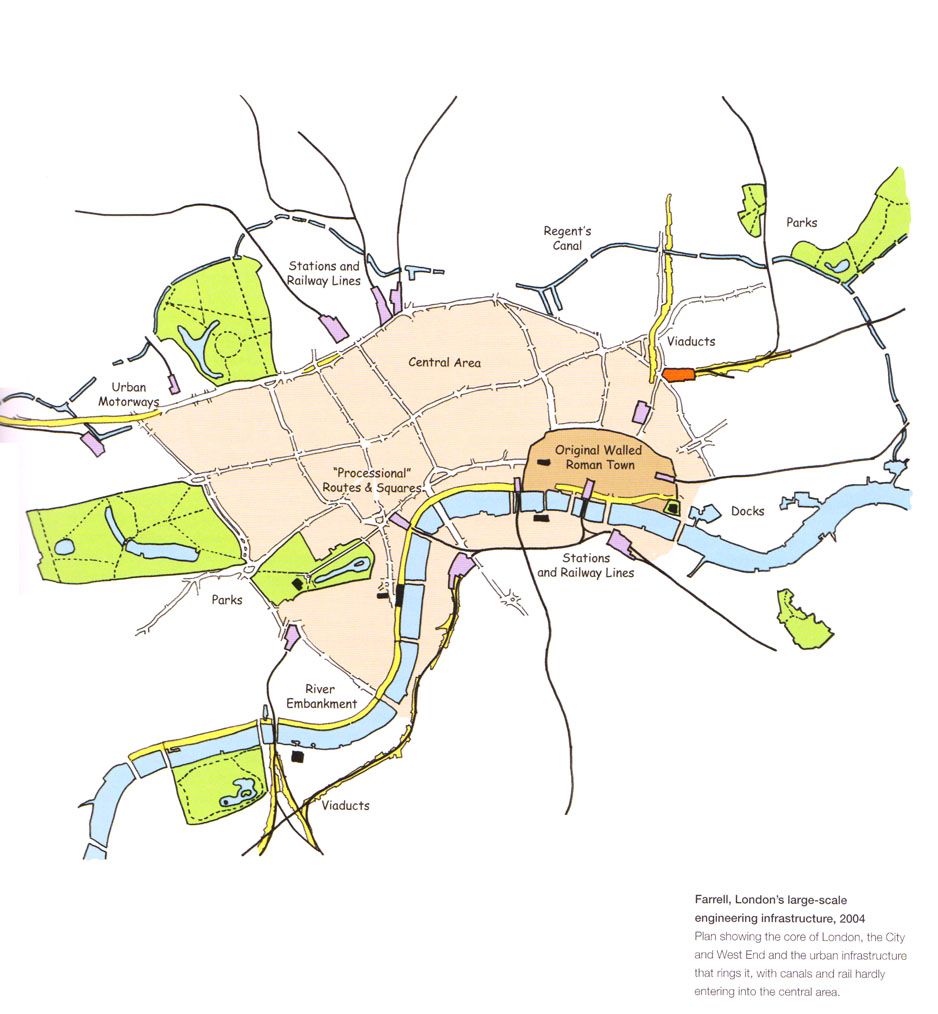
Shaping London by Terry Farrell

I have recently been enjoying Terry Farrell’s book “Shaping London: the patterns and forms that make the metropolis”. Farrell is one of the UK’s best known and respected urban planners, and his passion for place-making and urban culture shine through in this accessible discussion of the development of the capital.

Rather than an analysis of planning politics and economics, Farrell considers the historic features that underlie London’s structure and continue their influence to the present day- the Thames, village centres, estates and major transport infrastructure. He convincingly shows through text and illustration that contemporary planning tensions between connectivity and place-making are age-old London challenges, from the bridging the Thames 2000 years ago to present day issues over airports and motorways.

Of particular interest to me was the discussion of rail development. London is currently dominated by rail-land development schemes (Kings Cross, Stratford, Waterloo, Paddington…) with difficulties in integrating these sites into the wider urban realm. The history of the railways underlies the many issues of connectivity and isolation that create severance in areas of Inner London from rail and industrial infrastructure.


So overall a very enjoyable book. And as a bonus it includes some great images from CASA’s very own Andy Hudson-Smith.

Cycling City Tensions

With a few notable exceptions such as Cambridge, cycling in UK cities is minimal compared to continental European examples, and boosting cycling is a massive opportunity for improving travel sustainability and health in Britain. The potential is greatest in London, with its high density mixed-use form, relatively flat topography and benign climate that favour cycling; in addition to congested and expensive car and public transport networks that leave many looking for alternatives.

Planning policy at the Greater London Authority level recognises this potential and has become increasingly pro-cycling, with recent investments in the ‘Cycling Superhighways’ scheme– longer distance radial cycle routes that (almost) join up; the bike hire scheme; and modest improvements at many junctions and in cycle parking facilities. These measures have helped to increase the level of cycling in London substantially in the last decade (although beginning from a very low starting point):

So can this trend be accelerated to make London a real cycling metropolis, a larger scale version of Copenhagen or Amsterdam? I believe it’s possible, but I discuss one of the biggest obstacles here- safety and space. (Other obstacles include terrible integration with public transport, bike theft, image…).

On the 4th October a student from Korea was crushed to death by an HGV vehicle near Kings Cross, becoming the 13th fatality in London this year. Overall cycling fatalities and injuries declined in the early 2000’s, in line with pedestrian and car accidents in general, but have increased in recent years as cycling trips have increased. There were 467 serious injuries in 2010, up 8% on the previous year. Cycling in London is a hectic experience of dodging traffic and aggressive driving, with very minimal segregated lanes and many dangerous junctions to avoid.

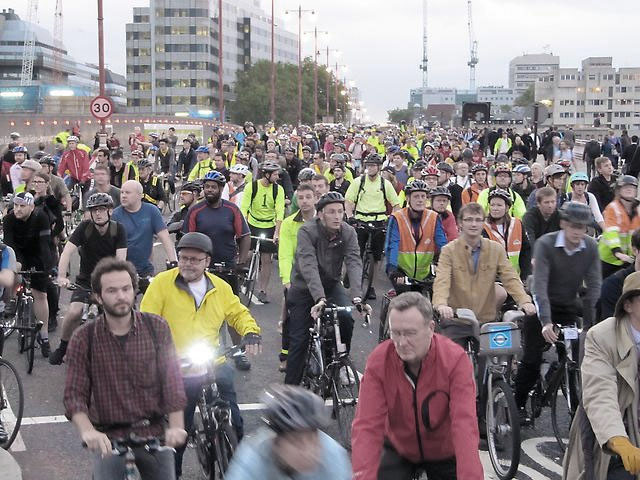
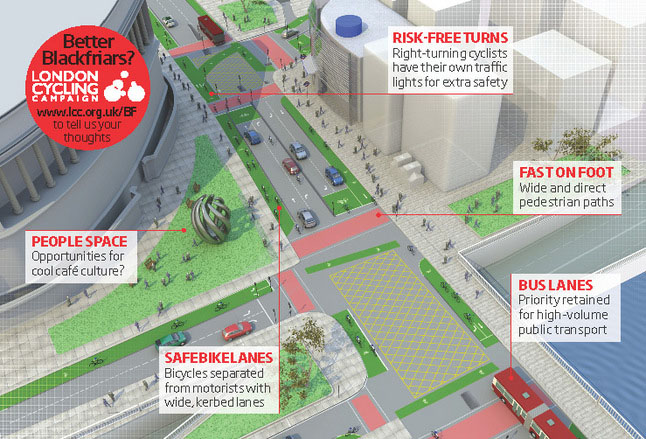
Currently a high profile debate is occurring over one such accident blackspot, Blackfriars Bridge, where two cycling fatalities have occurred in recent years. The London Cycling Campaign argues that the TfL junction redesign fails to address cycle safety, and staged a mass demonstration on the 12th October of 2,500 cyclists, and are promoting an alternative junction design. Additional campaigns include the issue of HGV’s, which are responsible for half of all cycle fatalities.


Ultimately a serious increase in cycling use requires a serious improvement in safety, and this means the creation of many more segregated cycling routes and the redesign of many key junctions. These measures will translate into reductions in vehicle flow in London, and TfL seem largely unwilling to make this compromise when it comes to major roads. A significant culture change accepting cycling as a key part of London’s transport would have to occur to achieve a genuine cycling city.


Barratt Homes write National Planning Policy Framework

The UK government is seeking to dramatically overhaul the English planning system, releasing the National Planning Policy Framework consultation in late July. This intends to streamline the system, reducing the array of previous planning policy frameworks into a single 50-page document. Various government ministers, including the chancellor, have been arguing this is a vital reform to ‘get Britain building’ and boost growth in a time of economic hardship.

As someone who cares deeply about the economic success and quality of life of the UK, reading this document was very alarming, as its vague pro-development language fails to get to grips with the economic and built environment challenges we face now and in the future.

The document states there should be a “presumption in favour of sustainable development” yet fails to define sustainability in any rigorous way (i.e. natural resources, energy, carbon emissions…), thus effectively making policy “a presumption in favour of development”. The previous requirement to prioritise developing brownfield land, a central policy in urban regeneration, is abandoned. The section on transport is weak, stating applications “should not be refused permission on transport grounds unless the residual impacts of development are severe”. There is no understanding of cities as the engine of the UK’s economic growth, nor of the regional relationships that are needed for urban economic competitiveness.

Unsurprisingly there has been a backlash by many organisations against the proposal. As well as rousing the green lobby and the National Trust in opposition, the policy has the unusual achievement of bringing together both The Guardian and The Daily Telegraph in condemning it. On the transport side, the RAC and Campaign for Better Transport (again two organisations often in opposition) come together to criticise the current document. I would urge anyone concerned with these issues to take part in the consultation, or sign the National Trust Petition.

There is undoubtedly a need in the UK for major housing expansion and for facilitating business growth through planning. This requires a coordinated approach to development focussed on cities, urban regeneration, boosting the knowledge economy, and taking into account the severe energy constraints and carbon reduction limitations we face in coming decades (i.e. we need highly energy efficient homes and a decent life without mass car ownership). This document doesn’t even get close, and policy makers need to go back to the drawing board for a more progressive vision.


High Rise Hangover

Swept up in the wave of the mid-2000’s property boom, planning authorities signed-off a series of new high rise developments in London- bigger and bolder than any in the city’s history. It is only now that the cumulative effects of these decisions are emerging on the London skyline. Faced with the bleak picture of our current economic climate, these buildings could be seen as the height of speculative folly- rampant capitalism gone awry in the kind of short-term money grabbing that led to the current economic crisis. Or maybe, to take a more optimistic view, are these instead symbols of confidence in London’s ability to ride-out the storm?

London is overall a low density city compared to say New York or Tokyo, or even Paris. The UK’s first experiments with high-rises began post-WWII, with cheap Corbusier tower imitations built to solve massive housing shortages. These towers were often aesthetically dull, difficult to live in (even dangerous), and conflicted with traditional street networks. Even those few high rise projects of good quality (like the Barbican) divided opinion with their aggressive style. Hence the traditional dislike of high-rise building in Britain.

This attitude began to change with the commercial success of Canary Wharf in the late 1990’s, and the popularity of 30 St Mary Axe by Foster & Partners, nicknamed the Gherkin. High-rise developers now actively promote skyscraper nicknames to make their multi-million investments seem more friendly and part of the city’s furniture.

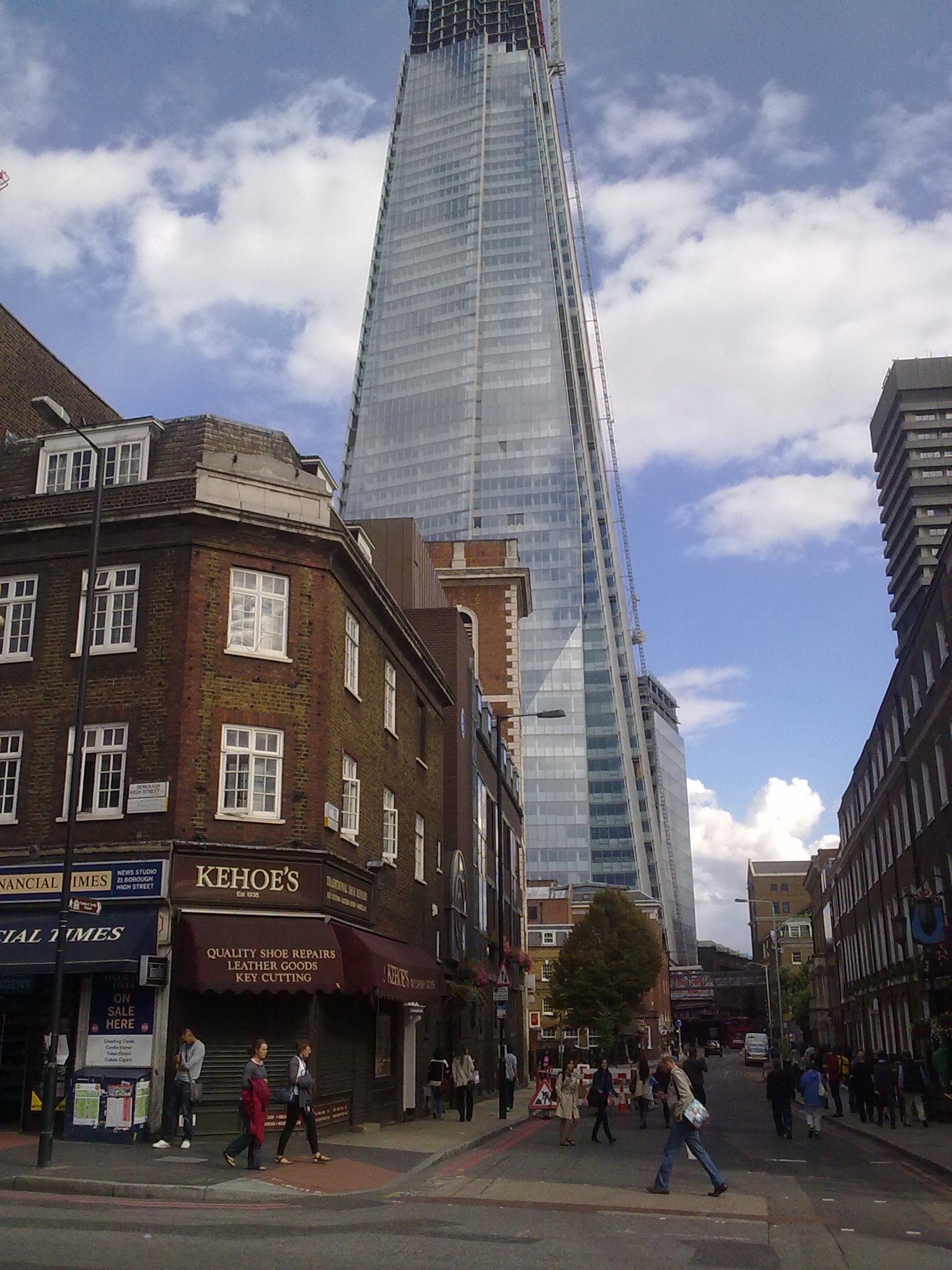
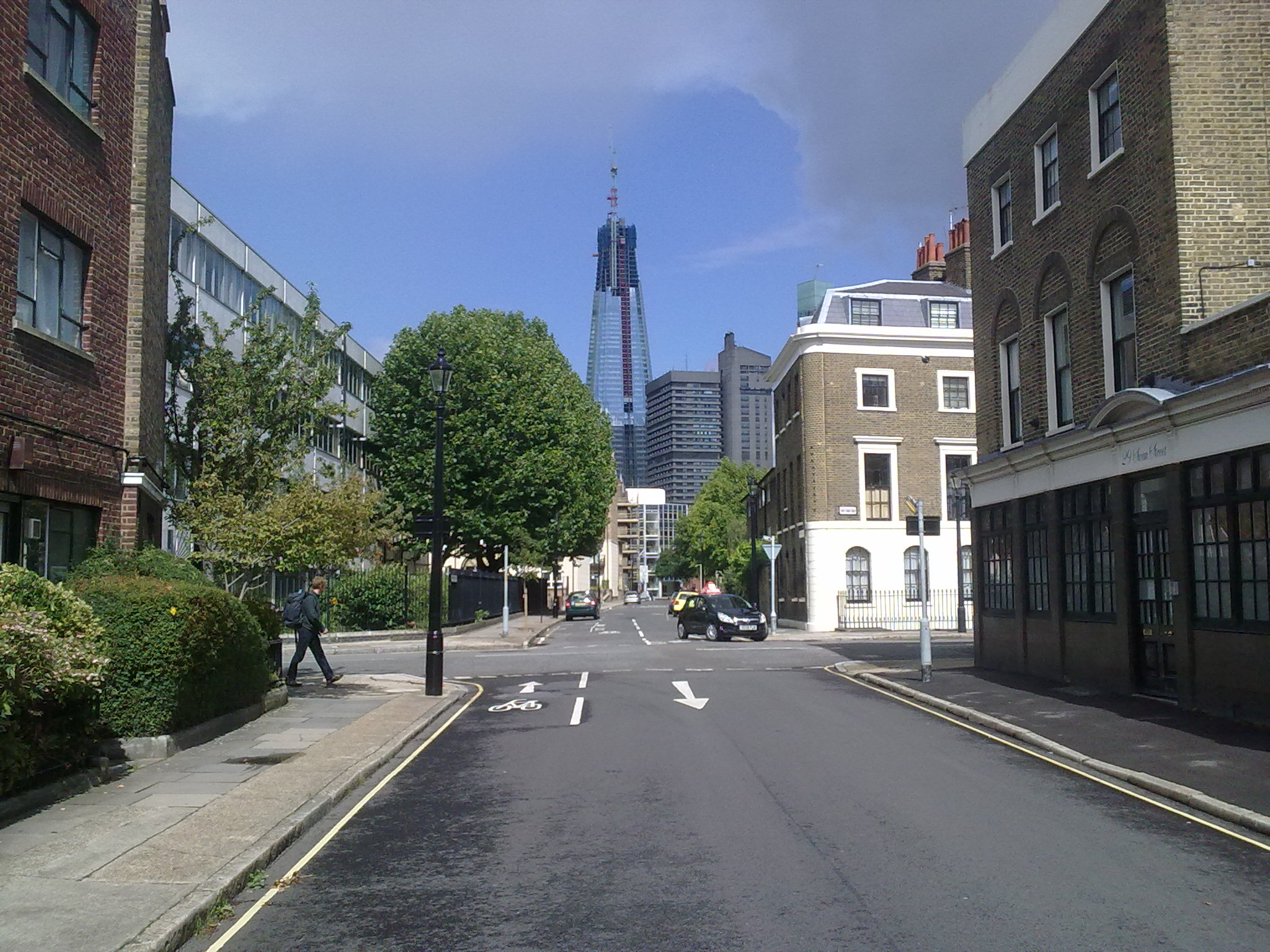
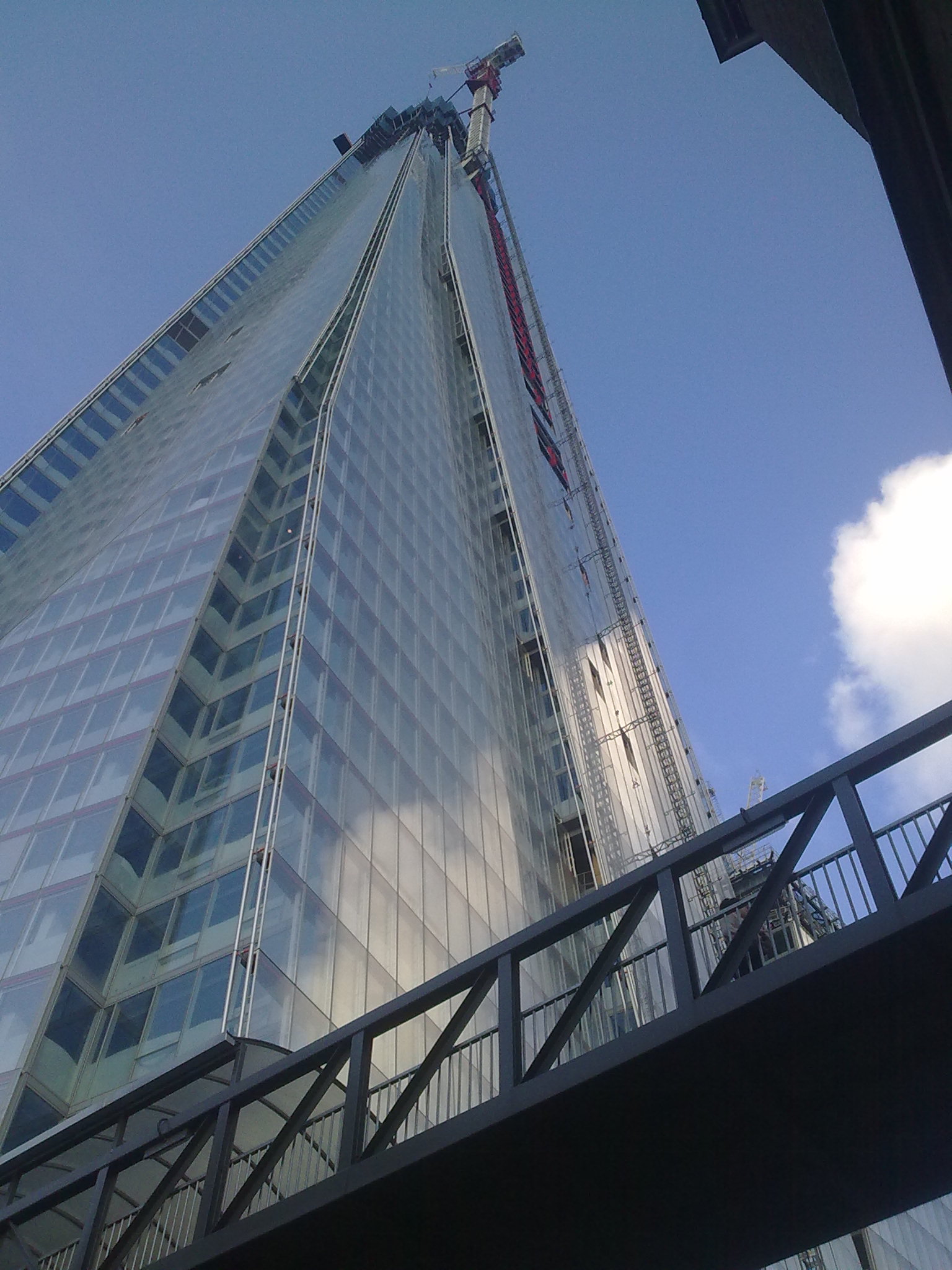
By far the tallest of the current crop of London skyscrapers is London Bridge Tower, or the ‘Shard’, which is now nearing completion. At a height of over 300 metres it’s not tall by international standards, but for London it’s a giant, 120 metres taller than the Gherkin. It sits outside of the main high-rise City cluster on the Southbank and, like Canary Wharf tower before it, could form the centre-piece of a new cluster. It’s certainly awe-inspiring, creating a Manhattan-like vertiginous feeling when you get up close. The tapered spire-like form limits the visual impact of the massive structure, and it sits not unattractively amongst the jumble of buildings south of the river.
Yet despite the Shard being an engineering marvel, you have to question whether this is an appropriate direction for the future of London. In scale terms it dwarfs anything on the London skyline, sitting incongruously with historic sights such as Tower Bridge and St Paul’s Cathedral. Despite architect Renzo Piano’s claims that he was inspired by London’s historic spires and ship masts, the structure appears sleekly anonymous and corporate, transferable to any world city, Dubai-on-Thames. There’s more than a hint of Bladerunner about the design, like we’ve decided sci-fi dystopia is the way-to-go for London. Perhaps this is a honest expression the social inequalities we’ve created, argues Jonathan Jones.

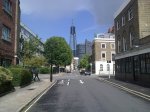
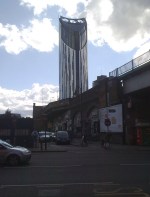
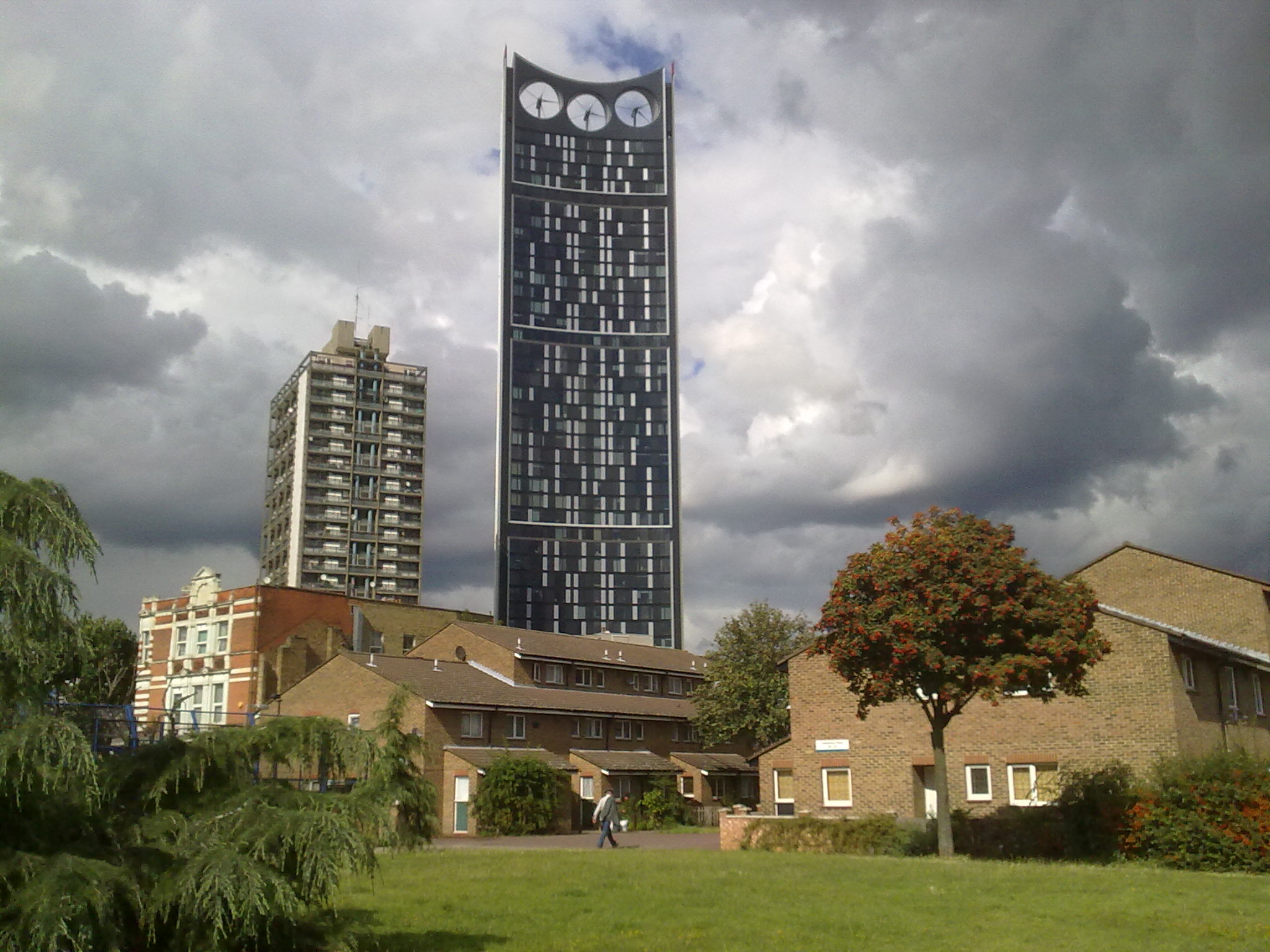
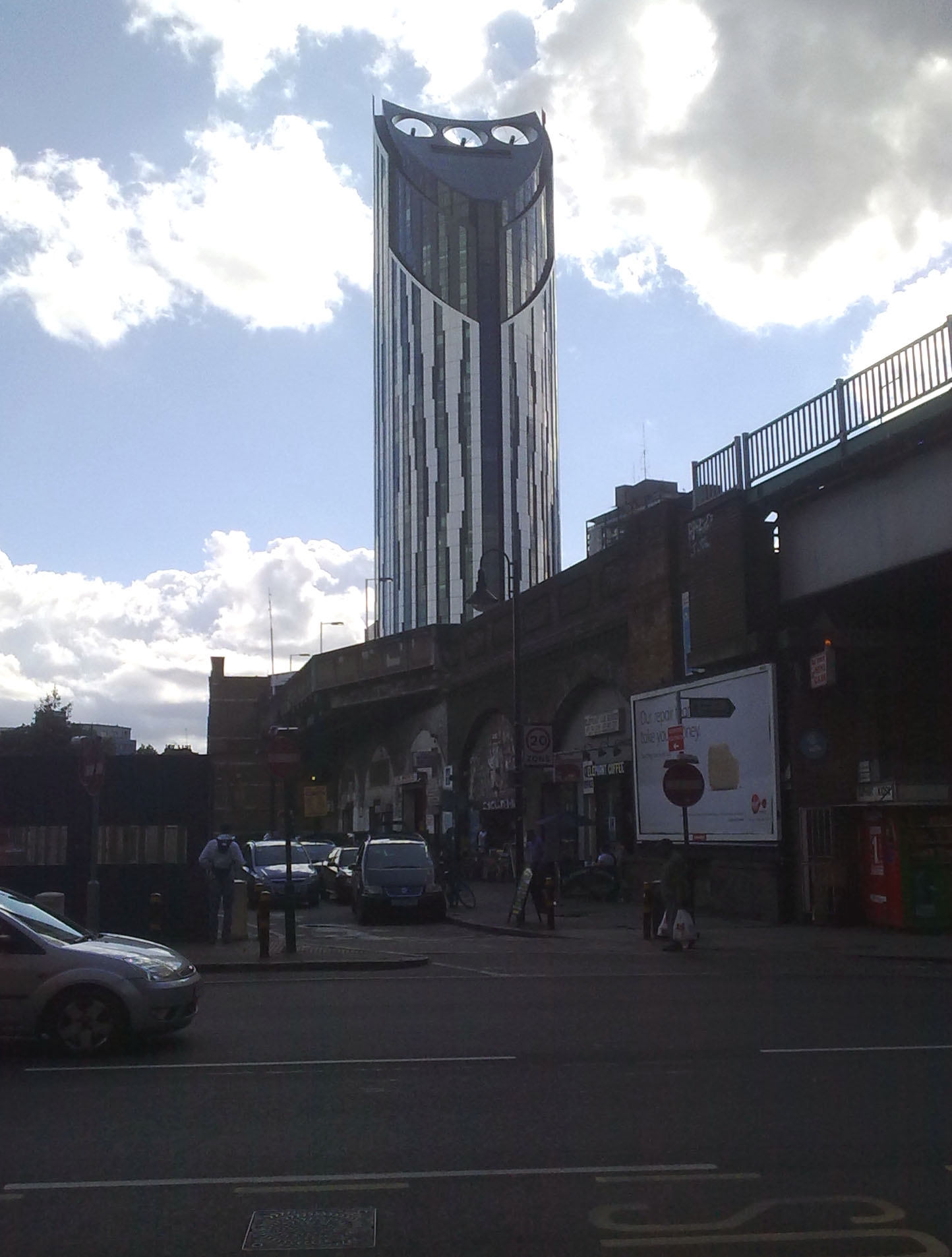
Time will tell how the public judge the Shard (or whatever alternative moniker catches on- the Spike? the Prick?). Soberingly it’s probably the best of the current breed of new skyscrapers in London. Continuing the theme of sci-fi kitsch, the worst new building in the UK, as voted in the 2010 carbuncle cup, is the Strata Tower at Elephant and Castle.

The Strata has an aggressive plastic-looking form, topped with three wind turbines. These turbines will reportedly supply 8% of the building’s electricity needs- a poor return for such a visually intrusive feature. High density development can bring sustainability benefits, but the embedded energy from the construction of thousands of tonnes of steel, concrete and glass nullifies the green credentials of any skyscraper, and the Strata tower’s turbines are surely the worst kind of greenwashing. Developers have dubbed Strata Tower the ‘Razor’, though I find the alternative moniker of ‘Sauron’s Tower’ better captures the building’s design and symbolism. Tolkien fans will note however that Sauron had a good deal more style than the Strata, and preferred geothermal power.


The real tragedy of Strata it that it’s supposed to be the catalyst for the regeneration of Elephant and Castle, a deprived district, notoriously badly designed with oppressive road intersections and 1960’s mass housing. Plans for major regeneration have been in place for many years, but there is currently little evidence on the ground. At present the debate is focussing on tranforming the traffic interchange, with TfL blocking more radical plans due to reduced vehicle flow impacts.

Not to be outdone by these Inner London imitators, the money-machine of the City has it’s own ambitious plans to win London’s race to the top/bottom. This includes a rather elegant fountain-pen shaped tower dubbed the Pinnacle, similar in height to the Shard, and also what I believe will go down as the biggest mistake in the current generation of London skyscrapers- 20 Fenchurch Street Tower. This ‘unique’ design gets bigger as it rises, thus providing larger floor-plates to maximise rents, and creating what will likely be a highly overbearing form at street level. Worst of all is the view from the Thames, where the building presents a bulging outline and inward looking face, in a remarkable resemblance to a sore thumb. In profile it looks like a hoodie. The Sore Thumb is now back under construction and is coming Londoners’ way in 2014.

Can we learn anything then from London’s new skyscraper bestiary? Our age of iconic architectural bling seems to have entered a new phase of attention-grabbing arrogance, with playful techno-futuristic aesthetics used as a marketing tool for investors and to soften the edges of raw soulless capitalism. For every interesting design there are several ungainly mistakes, and planners don’t seem to know the difference. Or alternatively authorities have decided that development trumps aesthetic or environmental concerns (worryingly this mode of thinking is the basis for proposed reforms to the planning system- more in a later post). The eccentric architectural laboratory of London continues with the modernist relics of the 2oth century now paired with our own 21st century futuristic fad, except this time the buildings are three times taller.  If we imposed a blanket-ban on all structures higher than 100 metres then coming generations would probably thank us.